 跳至内容
跳至内容 
Two fitting mechanisms dominate multilayer composite pipe installation. Here’s how each one actually seals, and which one fits your project.
PEX-AL-PEX, also called multilayer composite pipe (MLCP), sandwiches an aluminum layer between two PEX layers to combine flexibility with dimensional stability. That composite structure needs its own fitting category, distinct from what’s used on pure PEX or PPR: brass compression and brass push-fit (push-to-connect) fittings. Both are governed by the same pipe standard, both commonly use dezincification-resistant brass, and both are widely stocked by distributors — but they seal the pipe in fundamentally different ways, with different trade-offs for installation speed, re-serviceability, and long-term reliability.
Audio summary. PEX-AL-PEX, or multilayer composite pipe, is governed by the ISO 21003 standard, which rates typical systems for a maximum working pressure of 10 bar and a maximum working temperature of 95 degrees Celsius, with a 50 year design life. Two brass fitting types dominate this pipe category. Compression fittings use a threaded brass nut and a split ring or olive that are tightened with a wrench onto the pipe, creating a mechanical seal that can be disassembled and reused. Push-fit fittings use an internal grab ring and O-ring that lock onto the pipe the moment it’s inserted, requiring no tools to install but needing a separate release tool to remove. Compression fittings generally offer stronger resistance to vibration and thermal cycling because the seal comes from metal compressed onto the pipe. Push-fit fittings trade some of that robustness for installation speed, and are more sensitive to scratches on the pipe surface. Both fitting types are commonly made from CW602N brass, a dezincification resistant alloy tested under ISO 6509, which matters for long-term reliability in drinking water systems. Choose compression fittings where vibration resistance and reusability matter most, and push-fit fittings where installation speed is the priority.
Key Takeaways
- PEX-AL-PEX (multilayer) pipe systems are governed by ISO 21003, commonly rated for 10 bar maximum working pressure and 95°C maximum working temperature with a 50-year design life (ISO 21003-1).
- Compression fittings use a threaded brass nut and split ring/olive tightened onto the pipe — fully re-serviceable, but requiring a wrench and multiple installation steps.
- Push-fit fittings use an internal grab-ring and O-ring that lock on insertion in seconds, but need a separate release tool for disassembly and are more sensitive to pipe-surface scratches.
- Both fitting types commonly use CW602N (CuZn36Pb2As) dezincification-resistant brass, tested to ISO 6509 with a maximum dezincification depth of 200 µm to qualify (ISO 6509).
- No independently verified installation-time or cost comparison exists between the two fitting types in the public technical record; treat any specific percentage or minutes-saved claim as a qualitative trade impression, not a lab-tested figure.

ISO 21003: The Standard Behind Multilayer Pipe
ISO 21003, “Multilayer piping systems for hot and cold water installations inside buildings,” is published in multiple parts covering general requirements (Part 1), pipes (Part 2), and fittings (Part 3) (ISO 21003-1; ISO 21003-3). Under this standard, multilayer pipe systems are commonly rated PN10, meaning a maximum working pressure of 10 bar, with a maximum working temperature of 95°C and continuous-service ratings typically closer to 70°C, backed by a 50-year design-life expectation at these conditions. Any fitting sold for use with PEX-AL-PEX pipe should be qualified against this same standard, not a generic brass-fitting spec.
Fenilo’s PEX-AL-PEX brass fitting range includes press fittings, compression fittings, and compression ball valves. These are connection components for separately sourced pipe. Confirm the selected fitting’s dimensions, pressure and temperature ratings, and material specification before ordering.
How Compression Fittings Work
A compression fitting joins the pipe with a threaded brass nut and a split O-ring or metal olive. Installation involves cutting the pipe, reaming the cut end, positioning the O-ring or olive, threading the nut onto the fitting body, and torquing it down — a multi-step process requiring a wrench but no special tool (PexUniverse technical guide). The resulting joint is fully re-serviceable: it can be disassembled and reassembled with a wrench alone, which makes compression fittings a common choice where future maintenance access matters, such as manifold connections or exposed mechanical rooms.
How Push-Fit Fittings Work
A push-fit (push-to-connect) fitting uses an internal grab-ring and O-ring that lock onto the pipe the moment it is inserted, with no tools required for installation. This makes push-fit connections significantly faster to install in the field, especially in tight spaces where turning a wrench is difficult. The trade-off is that disassembly requires a separate release tool or collar to depress the grab-ring, and the seal is more sensitive to scratches or gouges on the pipe’s outer surface, since the O-ring depends on a smooth contact surface to seal properly.
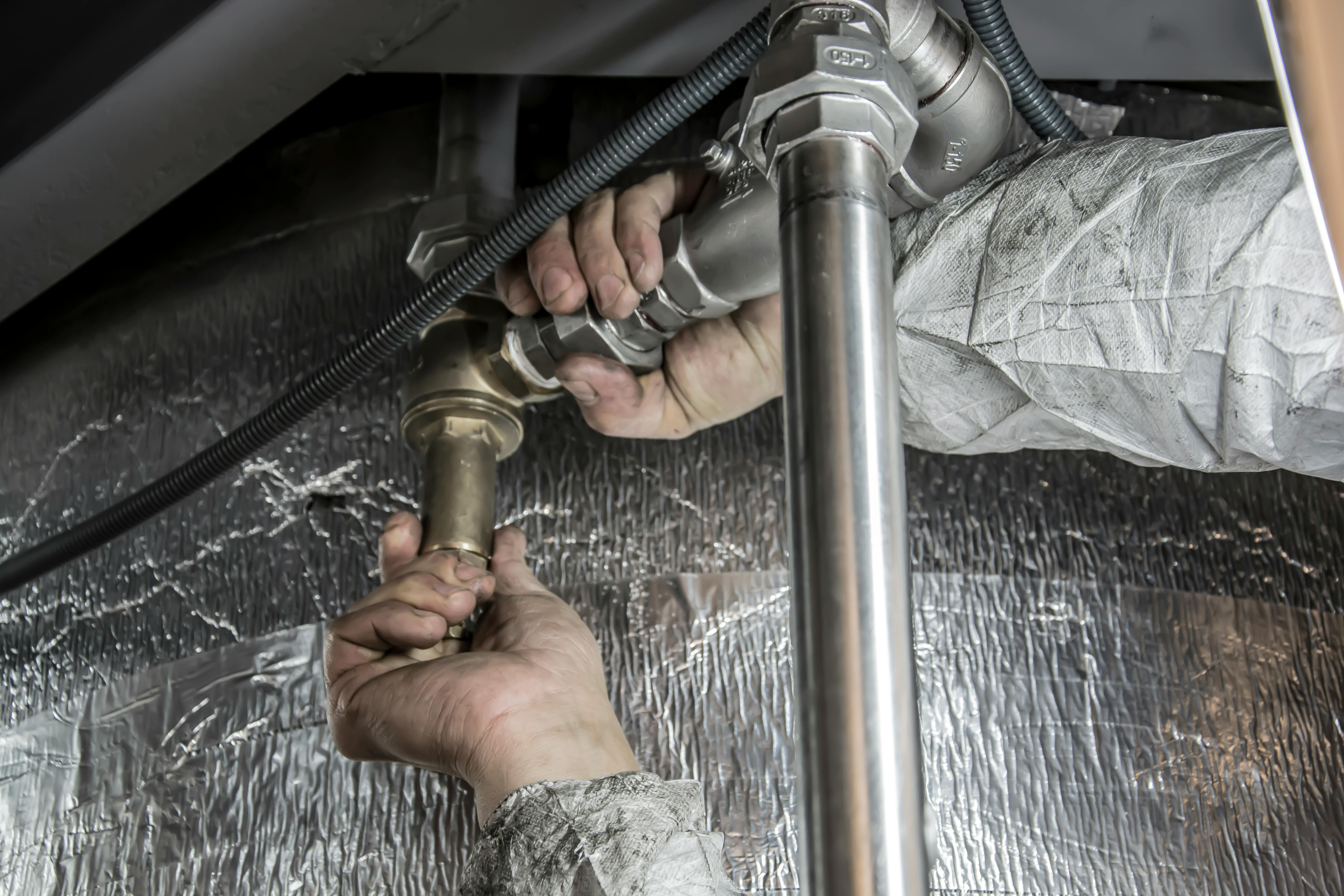
A manufacturer walkthrough of installing a brass compression fitting on multilayer composite pipe. Source: COMAP.
Why the Brass Alloy Matters
Whichever mechanism is used, the fitting body is typically machined from CW602N brass (CuZn36Pb2As), the standard dezincification-resistant (DZR) alloy specified for potable-water fittings, with its arsenic inhibitor suppressing selective zinc loss under BS EN 12165 and BS EN 12164. DZR qualification itself is tested under ISO 6509: a specimen is exposed to a 1% copper(II) chloride solution at 75°C for 24 hours, and the maximum acceptable dezincification depth is commonly set at 200 µm (ISO 6509). For a deeper look at why this matters for long-term reliability, see brass insert fittings explained and brass vs plastic pipe fittings.
Compression vs Push-Fit: Side-by-Side
| Factor | Compression Fitting | Push-Fit Fitting |
|---|---|---|
| Sealing mechanism | Threaded nut + split ring/olive, mechanically compressed | Internal grab-ring + O-ring, locks on insertion |
| Tools needed to install | Wrench | None |
| Installation speed | Slower, multi-step | Faster, single push |
| Disassembly | Wrench (fully re-serviceable) | Requires a release tool/collar |
| Sensitivity to pipe-surface scratches | Lower | Higher (relies on smooth O-ring contact) |
| Vibration/thermal-cycling resistance | Generally stronger (metal-to-pipe compression) | Good, but seal depends more on elastomer condition |
| Typical alloy | CW602N DZR brass | CW602N DZR brass |
No named, quantified study comparing installation time or cost per joint between compression and push-fit fittings on PEX-AL-PEX pipe could be located for this article. The speed and tool differences above are well-established qualitative trade consensus, not a lab-tested numeric comparison — treat any specific “X% faster” claim you see elsewhere with skepticism unless it cites a named methodology.
Sourcing brass fittings for multilayer pipe?
Fenilo offers press fittings, compression fittings, and compression ball valves for PEX-AL-PEX systems. Its product page specifies CW617N forged brass. The push-fit mechanism and DZR alloys discussed in this guide are general selection topics, rather than confirmed specifications for Fenilo’s range. View the available fittings and inquire about your required connection type and material.
Request a QuoteFrequently Asked Questions
Which is more reliable long-term, compression or push-fit fittings?
Both, when correctly installed with the appropriate DZR brass alloy, are widely used in long-service multilayer pipe systems. Compression fittings offer a mechanically stronger, fully re-serviceable connection, while push-fit fittings offer speed at the cost of needing a specific release tool for future disassembly and slightly higher sensitivity to pipe-surface condition.
Can push-fit and compression fittings be mixed on the same pipe run?
Yes, as long as both fitting types are rated to the same ISO 21003 pressure and temperature class as the pipe. Many installers use push-fit fittings for speed on straightforward runs and compression fittings at access points that may need future servicing.
Do push-fit fittings work on scratched or damaged pipe?
Not reliably. Because the seal depends on an O-ring making even contact with the pipe’s outer surface, scratches, gouges, or out-of-round pipe ends can compromise the seal. Compression fittings are generally more tolerant of minor surface imperfections since the mechanical compression can accommodate small irregularities.
What does CW602N mean on a brass fitting datasheet?
CW602N is the EN designation for CuZn36Pb2As, a dezincification-resistant brass alloy containing a small arsenic addition that inhibits selective zinc corrosion. It is the most commonly specified alloy for potable-water brass fittings, including both compression and push-fit types for multilayer pipe.
Conclusion
Compression and push-fit fittings solve the same problem on PEX-AL-PEX pipe through different mechanisms, and the right choice depends on the installation context rather than one type being universally better. Compression fittings suit access points and applications where re-serviceability and vibration resistance matter most; push-fit fittings suit high-volume installations where speed is the priority. Both should be specified in ISO 6509-tested DZR brass, most commonly CW602N, regardless of which mechanism you choose. For related fitting categories, see brass fittings for copper pipe systems and PEX vs PPR pipe if you’re still deciding on the pipe material itself.