
What Is a PPR Ball Valve? How It Works & Where to Use It
A PPR ball valve is a quarter-turn shut-off valve designed for PPR (polypropylene) water supply systems, using a rotating ball core to start or stop flow with a simple 90° turn of the handle. It is one of the most common isolation valves in residential and commercial plumbing.
The Quick Answer
A PPR ball valve controls water flow in PPR piping systems. Inside the valve body sits a hollow ball with a bore through its center. When the handle is parallel to the pipe, the bore aligns with the flow path and water passes freely. Turning the handle 90° rotates the ball so the solid face blocks the bore — flow stops instantly. This simple, reliable quarter-turn design is why ball valves are the default choice for main-line isolation in water supply systems.
Anatomy of a PPR Ball Valve
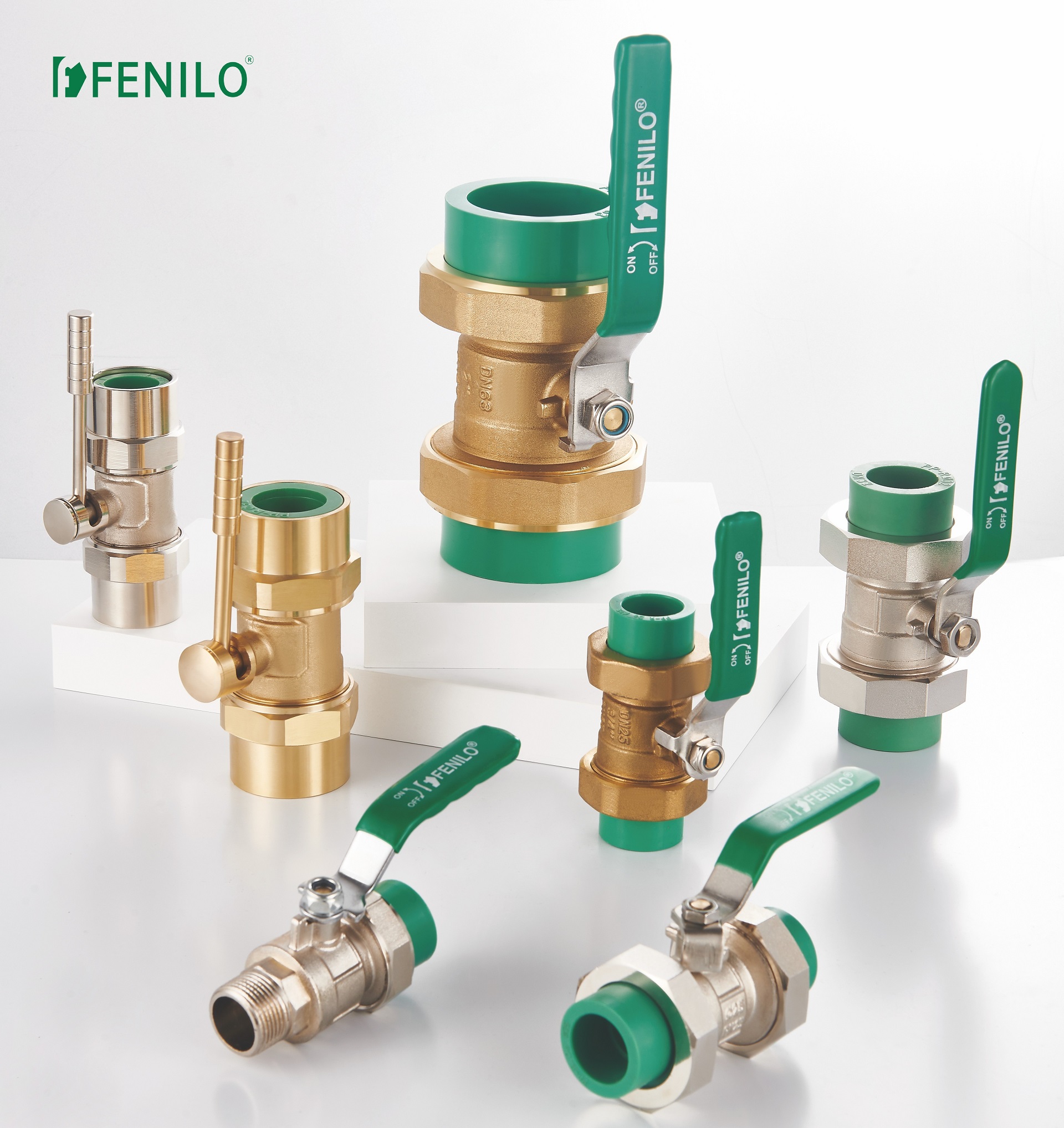
| Component | Function |
|---|---|
| Ball core | Rotating sphere with a through-bore; controls flow |
| PTFE (Teflon) seats | Seal around the ball; low friction, leak-tight |
| Stem | Connects handle to ball; transfers rotation |
| Handle / lever | Provides the 90° operating lever |
| Body (PPR or brass) | Housing that connects into the piping system |
How the 90° Operation Works
Materials: PPR Body, Brass & PTFE
PPR ball valves come in two main constructions. Full-PPR valves have a PPR body fused directly into the pipe system — no metal contact, corrosion-free, and ideal for potable water. Brass-cored valves use a brass body with PPR connection ends, offering higher pressure ratings and durability in heating systems. The ball is typically chrome-plated brass or stainless steel; the seats are PTFE for low friction and a tight seal. For potable water compliance, brass components should meet lead-free standards.
Typical Applications
- Main water line isolation — shut off the entire supply for maintenance
- Branch line control — isolate individual bathrooms, kitchens, or appliances
- Hot and cold water systems — both supply lines in residential plumbing
- Heating circuits — isolate radiators or floor-heating loops
- Commercial buildings — risers, distribution points, equipment isolation
Ball Valve vs Other PPR Valves
| Valve Type | Function | Best For |
|---|---|---|
| Ball valve | Quick 90° on/off | Main isolation, full flow |
| Stop valve | Linear throttling | Fine flow adjustment |
| Angle valve | 90° direction + control | Fixture connections |
| Check valve | One-way flow | Backflow prevention |
Key Specifications
PPR ball valves are specified by: connection size (20-110mm), pressure rating (PN10/PN16/PN20/PN25), and temperature range (typically up to 95°C). The polypropylene material properties determine these limits. Choose the pressure rating to match your pipe class — a PN20 system needs PN20-rated valves, not PN10. Fenilo manufactures PPR ball valves across the full size and pressure range.
How to Choose the Right One
FAQ
What does a PPR ball valve do?
A PPR ball valve shuts off or opens water flow in a PPR pipe system with a 90° turn of the handle — providing reliable isolation for maintenance and emergencies.
How do I know if a ball valve is open or closed?
When the handle is parallel to the pipe, the valve is open. When the handle is perpendicular (at 90°) to the pipe, it is closed.
Can a PPR ball valve be used for hot water?
Yes. PPR ball valves are rated for hot water up to approximately 95°C, making them suitable for both hot and cold supply systems.
What is the difference between a ball valve and a stop valve?
A ball valve provides fast full open/close with a 90° turn. A stop valve allows finer linear flow adjustment. Ball valves suit isolation; stop valves suit throttling.