
What Is PPR Pipe? Material, Properties & Common Uses
PPR pipe is a thermoplastic pipe made from polypropylene random copolymer (PP-R), designed for hot and cold water supply with a service life of 50+ years, temperature resistance to 95°C, and corrosion-free performance.
The Quick Answer
PPR (polypropylene random copolymer) is a heat-fusible thermoplastic pipe material widely used in residential and commercial water supply. Its defining characteristics: corrosion resistance, no scaling, 50+ year lifespan, and welded (fused) connections that are leak-proof. PPR has become the pipe of choice in Asia, Europe, the Middle East, and Latin America for potable water systems.
What Is Polypropylene Random Copolymer?
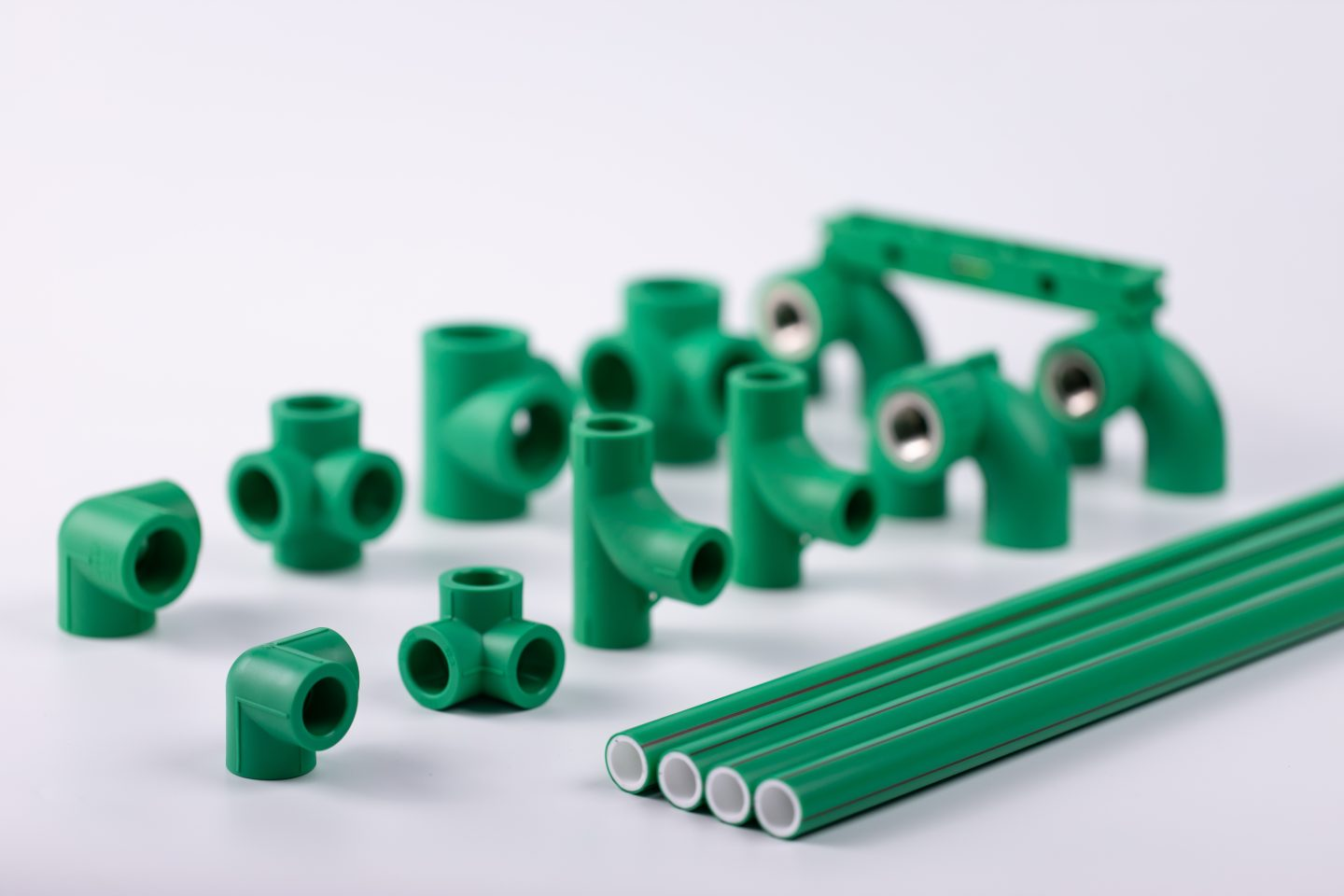
Polypropylene random copolymer (PP-R) is a polymer where propylene and ethylene monomers are randomly distributed along the chain. This random structure gives the material better impact resistance at low temperatures and improved long-term creep resistance compared to homopolymer polypropylene. The polypropylene material science explains why this random copolymerization matters for pipe performance.
Key Material Properties
| Property | Value / Behavior |
|---|---|
| Density | ~0.9 g/cm³ (lightweight) |
| Max operating temperature | 95°C (hot water) |
| Thermal conductivity | Low — good insulation, less heat loss |
| Corrosion resistance | Excellent — no rust, no scaling |
| Chemical resistance | Good for potable water and most chemicals |
| Fusion joining | Heat-fused for permanent, leak-free joints |
Temperature & Pressure Ratings
The 50-Year Lifespan
PPR pipes are engineered for a nominal service life of 50+ years under normal operating conditions (per ISO 15874 standards). This longevity comes from the material’s resistance to corrosion, scaling, and chemical attack — the failure modes that shorten metal pipe life. Because PPR does not corrode from the inside, water quality stays consistent and flow capacity does not degrade over time. This long service life is a primary reason PPR dominates modern water supply systems.
Common Uses
- Residential hot & cold water supply — the most common application worldwide
- Commercial buildings — hotels, offices, hospitals, schools
- Drinking water systems — safe, non-toxic material
- Heating systems — underfloor heating and radiator circuits
- Agricultural irrigation — chemical-resistant, long-lasting
Why PPR Over Other Materials
Compared to galvanized steel: no corrosion, no rust contamination, lighter weight, easier installation. Compared to PVC: PPR handles hot water (95°C vs PVC’s cold-water-only rating) and uses heat fusion instead of solvent glue. Compared to copper: dramatically lower cost, no thermal conductivity losses, no soldering risk. The combination of hot-water capability, durability, and cost makes PPR the value leader for water supply.
The Complete PPR System
A complete PPR system includes pipes plus fittings (elbows, tees, couplings), valves (ball, stop, check), and transition fittings (brass inserts for thread connections). The integrity of the system depends on every component matching — same PN class, same standards. Fenilo’s PPR system solution covers pipes, valves, and brass inserts as a coordinated package, ensuring system reliability.
FAQ
What does PPR stand for?
PPR stands for polypropylene random copolymer — a type of polypropylene with randomly distributed ethylene monomers, giving it better impact resistance and long-term performance for piping.
Is PPR pipe safe for drinking water?
Yes. PPR is non-toxic, chemically inert for potable water, and widely certified for drinking water use under standards like ISO 15874 and national drinking-water approvals.
How long does PPR pipe last?
PPR pipe has a nominal service life of 50+ years under normal operating conditions, thanks to its corrosion and scaling resistance.
Can PPR pipe handle hot water?
Yes — PPR is rated for continuous hot water service up to approximately 95°C, making them suitable for both hot and cold supply.