
Brass Insert Fittings Explained: What Are They & How Do They Work?
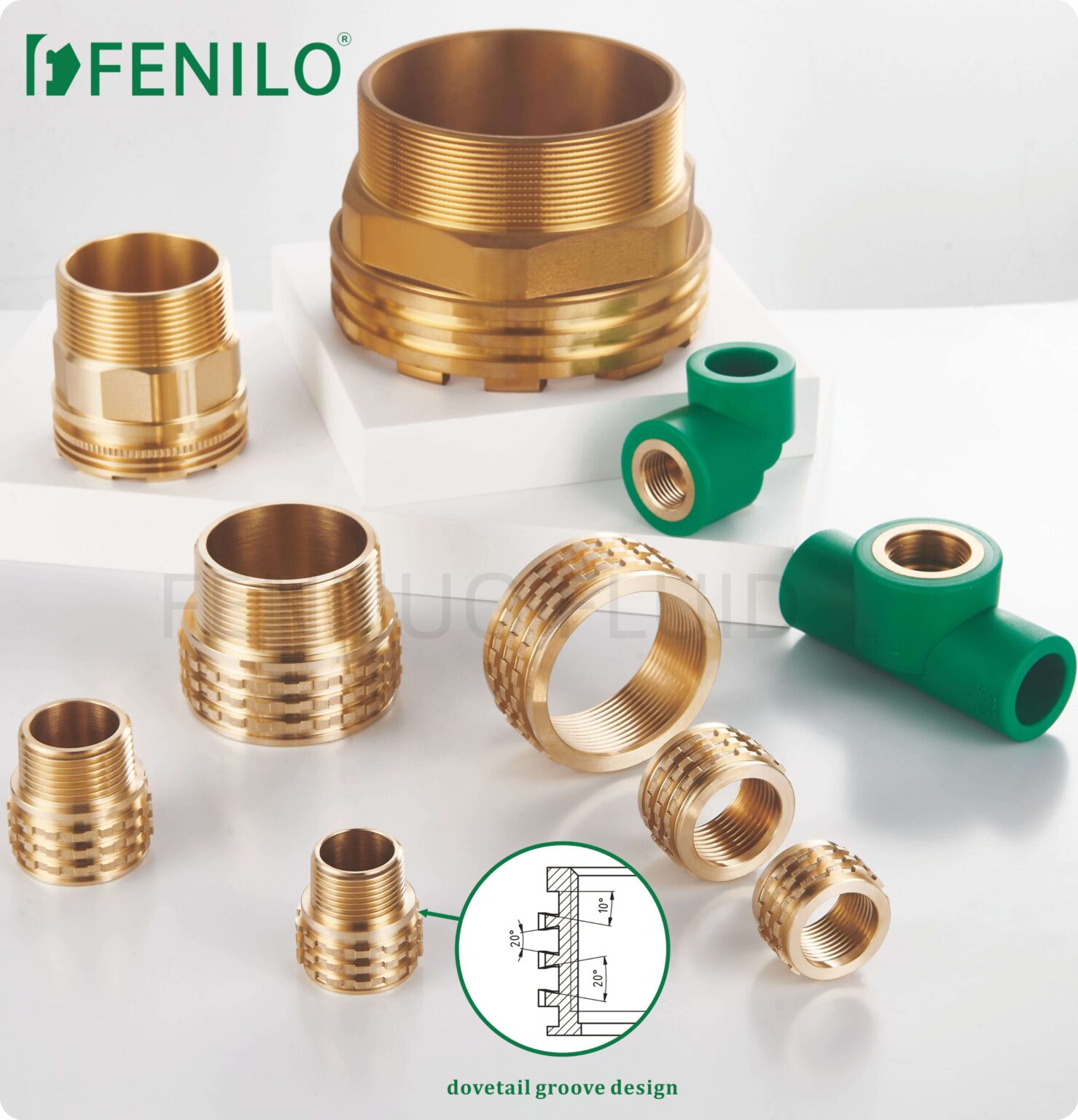
A brass insert fitting is a brass component with a metal thread that is molded into a PPR or plastic fitting, creating a durable transition from the plastic piping system to threaded metal connections.
The Quick Answer
Brass insert fittings solve a fundamental plumbing problem: how to connect PPR pipe to threaded metal equipment (water heaters, mixers, meters, valves). The solution is a precision-machined brass insert that is embedded into the PPR fitting body during molding. The result is a component with a plastic socket for fusion welding on one side and a metal thread on the other — combining the corrosion resistance of PPR with the threaded compatibility of brass.
How Brass Inserts Are Made Into PPR
The Thread Transition Role
The metal thread is the fitting’s working end. It comes in standard thread forms — BSP (British Standard Pipe), NPT (National Pipe Thread), and metric — to mate with equipment and other threaded components. The thread provides a reliable, reusable connection point: unlike fusion welding, threaded connections can be disassembled for maintenance. The pipe thread standards ensure compatibility across manufacturers.
Pull-Out Resistance Explained
Pull-out resistance is the fitting’s ability to stay anchored when axial force is applied — critical because plastic alone cannot hold a loaded thread. The insert’s anchoring design creates mechanical interlocking: the PPR shrinks around the insert’s knurled/grooved surface during cooling, forming a grip stronger than the plastic’s own tensile strength in many cases. Quality inserts are tested to withstand specified extraction forces, ensuring the thread connection never pulls free from the body.
Common Types of Brass Inserts
| Type | Feature | Common Use |
|---|---|---|
| Male thread insert | External thread | Connect to female-threaded equipment |
| Female thread insert | Internal thread | Accept male-threaded fittings |
| Union insert | Thread + union nut | Removable connections |
| Valve body insert | Thread in valve bodies | Ball/stop valves with metal connections |
Where They Are Used
- Water heater connections — PPR to heater threaded ports
- Mixing valves and showers — transition to valve threads
- Water meters — meter in/out threaded connections
- Faucets and appliances — connection to fixture threads
- Valve installations — ball, stop, and check valves with threaded ends
Material & Standards
Quality brass inserts use lead-free or low-lead brass for potable water compliance (e.g., NSF/ANSI 61, RoHS, REACH). The brass is typically machined from bar stock or hot-forged, then machined to precise thread tolerances. Surface treatment (nickel plating or passivation) improves corrosion resistance and appearance. For potable water, verify the insert meets your market’s lead-content requirements — a critical compliance point for North American and European imports.
How to Choose Quality Inserts
FAQ
What is a brass insert fitting?
A brass insert fitting is a precision-machined brass component with a metal thread, molded into a PPR/plastic fitting body to provide a durable transition to threaded connections.
Why use brass inserts instead of all-plastic threads?
Plastic threads strip easily and lack strength for repeated tightening. Brass inserts provide durable, reliable metal threads that mate with equipment and hold under load.
Are brass insert fittings safe for drinking water?
Yes, when made from certified lead-free/low-lead brass meeting standards like NSF/ANSI 61, RoHS, and REACH. Always verify potable-water certification for drinking applications.
Can brass insert fittings be reused?
The threaded end can be disconnected and reconnected. The plastic socket is permanently fused to the pipe and cannot be reused after removal.