
A stiff ball valve is usually scale, dry seats or a packing nut that is too tight. Here is how to tell which one you have, how to free the valve safely, and when to replace it.
Short answer: A ball valve is hard to turn when something adds friction between the ball, the seats and the stem. The usual causes are mineral scale from hard water, seats that have stuck to the ball after years in one position, a packing nut that is too tight, or a new valve with a tight seal. Cycle the valve gently first. If it stays stiff, replace it rather than force it.
Key Takeaways
- A new valve can feel stiff because the seats grip the ball tightly. That usually eases after a few cycles and does not mean the valve is faulty.
- On an older valve, mineral scale and seats stuck to the ball are the most common causes.
- Never use a pipe or cheater bar on the handle. The stem or the handle connection fails before a seized ball frees up.
- A valve that stays stiff after cleaning is near the end of its life. Replace it before it fails in the closed position.
- Operating important shut-off valves once or twice a year is the cheapest way to keep them from seizing.
What does “hard to turn” mean, and is it normal?
A ball valve should turn a quarter turn with steady hand pressure, and a little stiffness is normal on a new valve. The ball sits between two seats that seal against it, so every turn drags the ball across the seat material. A tight, well-made seal therefore has some resistance.
What is not normal is a valve that was easy to turn and is now stiff, a handle that needs a tool, or a handle that turns with a gritty feel. Check which of these three situations matches yours before you do anything else:
- New valve, stiff from the start: the seats are tight and dry. This is usually normal and eases with use.
- Old valve, gradually stiffer: scale, wear or dried seals are the likely cause.
- Valve not operated for years: the seats may have stuck to the ball, so the first turn is the hardest.
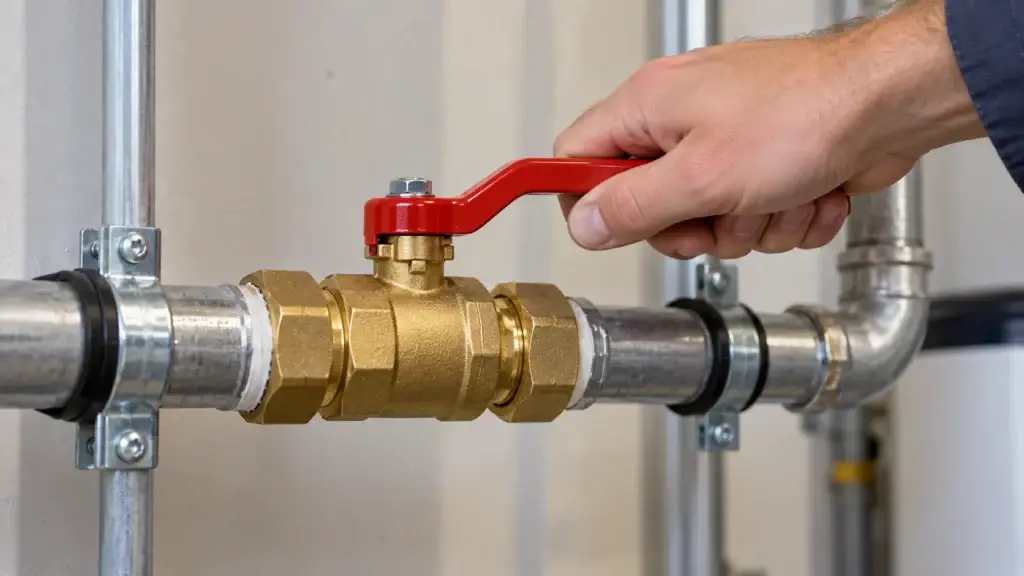
What causes a ball valve to be hard to turn?
The five most common causes are scale, stuck seats, an over-tightened packing nut, damaged seals and debris. The table links each cause to what you will notice and what to check first.
| Cause | What you notice | Check first |
|---|---|---|
| Mineral scale on the ball and seats | Gradual stiffness, gritty feel, common in hard-water areas | Water hardness; whether the valve is on a hot line or near a water heater |
| Seats stuck to the ball after long inactivity | Very stiff first turn, then easier | When the valve was last operated |
| Packing nut or gland too tight | Stiff from the stem, not gritty; may follow a leak repair | Whether the nut was recently adjusted |
| Damaged or dry stem seal or O-ring | Uneven resistance, sometimes with a drip at the stem | Moisture around the stem or handle |
| Debris or corrosion inside the valve | Sudden stiffness, or stops partway | Recent work on the line that could have released debris |
Hard water is a major factor because calcium and magnesium come out of the water as scale, and heat speeds that up. Virginia Tech Extension notes that hard water “contains high levels of calcium and magnesium ions” and that in pipes, “excessive mineral scaling can reduce water flow and pressure” (Virginia Tech Extension, Hardness in Household Water). The same scale can form on the ball and seats.
How do you free a stiff ball valve safely?
Start with the gentlest step and stop as soon as the valve moves. Forcing a seized valve is the fastest way to turn a stiff valve into a broken one.
- Make the line safe. Close a valve upstream and relieve the pressure if you plan to remove or open the valve. If the valve is the only shut-off, call a plumber.
- Check the packing nut. If the valve leaked recently and was tightened, loosen the nut slightly and test the handle. Retighten only until the stem stops dripping.
- Work the handle by hand. Rock it a small amount in both directions, then increase the travel as it frees up. Do this several times.
- Use a steady, short-leverage tool only if the handle is sound. A wrench on the stem square can help, but do not use a long pipe on the handle. Handles and stems shear before a stuck ball frees.
- Lubricate only if the valve can be opened. Use a lubricant that is approved for drinking-water contact and compatible with the seat and seal materials. Do not assume oil or a penetrating spray is safe on plastic or rubber parts. Follow the valve maker’s instructions.
- Replace the valve if it stays stiff. A valve that is still stiff after cleaning has worn or scaled seats and will keep getting worse.
How do you stop ball valves from seizing?
Operate the valve regularly: a full open-and-close cycle once or twice a year is enough for most shut-off valves. Moving the ball breaks up early scale and keeps the seats from bonding to it.
- Mark the valves that matter: main shut-off, water heater, riser and branch isolation valves.
- Cycle them on a schedule: open and close each one fully, then return it to its normal position.
- Fix leaks early: a dripping stem lets scale form around the packing.
- Treat hard water: a scale-control filter or a softener upstream reduces deposits on every valve in the system.
For why a ball valve works the way it does, see what a PPR ball valve is and how it works.
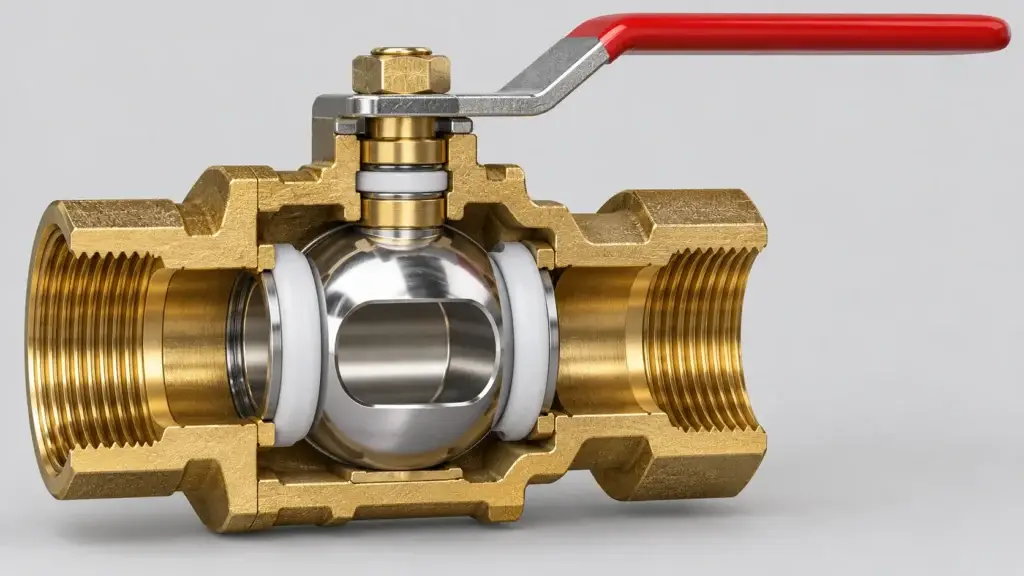
What should buyers specify to avoid stiff or seized valves?
Specify the seat material, the body material and the operating feel, and test a sample before you commit to a volume. Most stiffness complaints trace back to the same few choices:
- Body: a forged brass body holds its dimensions better than a casting with porosity or inconsistent walls, so the ball and seats stay aligned.
- Seats and seals: state the seat material and the stem seal on the drawing. Ask what lubricant is used at assembly.
- Handle and stem: ask how the handle is fixed to the stem, because a loose connection fails before the valve does.
- Torque feel: ask for a sample from the same batch you will receive, and judge it by hand.
Importers and distributors can also log returns by cause (scale, stuck seats, damaged stem, misuse) to see whether complaints come from the product or the water in the market. Our page for importers and distributors explains how we work with buyers.
How does Fenilo make ball valves that keep turning?
Fenilo hot-forges the brass body in CW617N / HPb59-1 and machines the ball and threads on CNC equipment in the same factory. Hot forging avoids the casting defects that cause porosity and uneven walls.
- Sealing: the valve uses a precision-machined ball with PTFE sealing.
- Flow: the ball is full-port, which reduces pressure loss.
- Installation: double union connections let the valve be replaced without cutting the pipework.
- Testing: every production batch is checked for pressure and leakage, and for dimensions and appearance.
See the PPR ball valve range for the models and sizes listed. Samples are available for assembly testing, and OEM and ODM work is supported.
Sourcing ball valves for your range?
Send us your sizes, connection types and target market. Fenilo can supply samples for assembly testing and support OEM and ODM development, with delivery and order terms confirmed per order.
Contact FeniloFAQ
Why is my new ball valve hard to turn?
A new ball valve is often hard to turn because the seats grip the ball tightly and are still dry. That stiffness usually eases after a few full cycles. If it stays very stiff, the valve may be defective and should go back to the supplier.
Can I use WD-40 on a stiff ball valve?
You should not assume WD-40 or other penetrating oils are safe on a ball valve, because they can attack some plastic and rubber parts and are not made for drinking-water contact. Use a lubricant approved for potable water and compatible with the seat and seal materials, and follow the valve maker’s instructions.
Why is my ball valve hard to turn after years of not using it?
A ball valve is hard to turn after years of inactivity because the seats can stick to the ball and scale can build up around it. Work the handle gently in small movements, and replace the valve if it does not free up.
Should I replace a ball valve that is stiff?
Yes, you should replace a ball valve that stays stiff after you have tried the safe steps, because the seats are worn or scaled and the valve is likely to fail. Replace it at a time you choose, not during a leak.
How often should I operate shut-off ball valves?
You should operate important shut-off ball valves fully open and closed once or twice a year. This keeps scale from building up and the seats from sticking to the ball.
Bottom line: A stiff ball valve needs a gentle, step-by-step approach: check the packing nut, work the handle by hand, lubricate only with a suitable product, and replace the valve if it does not free up. Operate valves yearly so they do not seize.