
CW617N is the standard forging brass for inserts and valve bodies, and it is a leaded alloy. Here is what that means under US and EU drinking water rules, and what to put on an RFQ.
Short answer: No, CW617N is not lead-free. It is a leaded brass, written CuZn40Pb2 in the EN system, with a nominal lead content of about 2%. In the US, “lead free” means a weighted average of 0.25% lead across wetted surfaces, and the EU is tightening the lead value at the tap from 10 to 5 µg/L. A CW617N part can still sit inside a compliant product, but the finished product must be assessed, so ask for certificates, not for a grade name.
Key Takeaways
- CW617N (CuZn40Pb2) contains lead on purpose, because lead makes brass cut cleanly and forge reliably.
- The US definition of “lead free” is a 0.25% weighted average across the wetted surfaces of a product, so a 2% alloy fails that test when taken alone.
- The EU does not label an alloy “lead-free”. It limits lead in the water at the tap, and Article 11 of Directive (EU) 2020/2184 sets up one framework for materials in contact with drinking water.
- Lead-free status and dezincification resistance are separate properties, and neither is shown by the CW number alone.
- Put the grade, the destination market and the certificate you need on the RFQ before samples are made.
Is CW617N brass lead-free?
No, CW617N is a leaded brass, and its lead is a deliberate part of the recipe. The symbolic designation CuZn40Pb2 reads as copper with about 40% zinc and about 2% lead. Supplier datasheets quote slightly different lead ranges around that figure, so take the exact limits from the EN product standard and from the mill certificate of your lot.
Lead does a specific job in this grade:
- Machining: lead breaks chips short, so CNC tools cut threads and bores cleanly and quickly.
- Hot forging: CW617N is the usual hot-forging brass, and the forged shape needs little finishing.
- Cost: an easy-cutting alloy keeps part cost down, which is why it is the default for general fittings and valve parts.
The same property is the reason it is regulated. Our comparison of CW617N and CW602N shows that both common forging grades carry about 2% lead, so changing between them does not change lead status.
What does “lead-free” mean in law?
“Lead free” is a legal threshold for a finished product, not a property of an alloy name. The US sets a numeric definition, while the EU sets a limit for the water and then governs materials separately. The table lists the main reference points.
| Market | What the rule measures | What it means for a leaded brass part |
|---|---|---|
| United States | Weighted average lead across wetted surfaces: 0.25% (0.2% for solder and flux) | A 2% alloy on its own is far above 0.25%; the whole product is calculated and certified |
| European Union | Lead in water at the tap; Article 11 sets the materials framework | No “lead-free alloy” label; materials must satisfy the hygiene requirements and positive lists that apply |
| Germany | Federal Environment Agency (UBA) evaluation criteria with a positive list of metallic materials | Check the current list for the exact alloy and use before committing |
In the US, the EPA explains that Section 1417 of the Safe Drinking Water Act defines lead free as a weighted average of 0.25% lead calculated across the wetted surfaces of pipes and fixtures. As of September 1, 2023, manufacturers and importers must certify that covered products meet the requirement.
In the EU, lead is controlled at the tap. The TZW water technology institute notes that the directive sets the lead value at 5 µg/L by the end of a 15-year transition period after the directive entered into force on 12 January 2021, after the earlier 10 µg/L value. Germany’s UBA publishes a positive list of metallic materials hygienically suitable for contact with drinking water, and its metallic materials document is dated 9 July 2026.
How does CW617N compare with lead-free and DZR brass?
CW617N is the easiest of the common brasses to forge and machine, and it is the one that carries the most lead. Low-lead and lead-free alloys replace the free-cutting role of lead with other elements, so they behave differently in the forge and on the CNC. The table compares the three groups buyers most often confuse.
| Property | CW617N (CuZn40Pb2) | CW602N (CuZn36Pb2As) | Low-lead / lead-free brass |
|---|---|---|---|
| Nominal lead | About 2% | About 2% | Much lower; value depends on the alloy and the rule applied |
| Why it is chosen | Forging and machining ease | Dezincification resistance after heat treatment | Meeting a lead limit in regulated drinking water markets |
| Forging and machining | Very good | Good, tighter process control | Generally harder on tooling; check with the supplier |
| Examples of grade names | CW617N, HPb59-1 (Chinese comparable) | CW602N | CW510L, CW511L, CW724R, US C69300 are names buyers meet |
| Treated as lead-free by name? | No | No | Not automatically; the certificate and the market list decide |
Two points follow from the table:
- Dezincification is a different question: a DZR grade resists zinc loss in aggressive water but still carries lead. Read our guide to CW617N and CW602N for the ISO 6509-1 side.
- A grade name is not approval: a low-lead grade name tells you the intent of the alloy, but acceptance for drinking water is decided by the product certification and the list that applies in the destination market. We did not verify the status of any named grade against current lists.
What does this mean for a molded-in brass insert?
For an insert, the grade matters, but the finished fitting is what gets certified. A brass insert is molded into PPR, PE, CPVC or PPSU, so only part of its surface may touch the water, and the product-level calculation counts wetted surfaces. Four points help a molder or brand owner frame the question.
- Product-level assessment: the US weighted average and the EU material rules apply to the finished fitting, not to a bar of metal on its own.
- Wetted area: how much brass actually contacts the water depends on the insert design and the plastic body, and the certifier works that out from your drawings.
- Grade as an input: a lower-lead grade makes the calculation easier, and a leaded grade makes it harder, so the grade is a design decision made early.
- Market first: a fitting for an unregulated market and one for California or the EU may need different insert grades on the same drawing.
If you are choosing between brass and another insert material for water contact, our guide to stainless steel inserts versus brass inserts covers the trade-offs.
What do lead certificates prove, and what do they not?
A certificate proves that a specific product passed a specific test, while a grade name only describes the alloy that was ordered. Ask which of these you are being shown:
- Material certificate: the mill or supplier report for the bar lot, showing the chemistry that was delivered, including lead.
- Product certification: a third-party certificate for the finished product against the standard your market uses, which is the document importers and inspectors usually need.
- Scope and date: the certificate names a product family and a date, so a new part number or a change of alloy can fall outside it.
- Marking and listing: the product, its listing and its mark should match the part you are buying.
The US rule also puts the duty on the supplier side: EPA says certification is required for manufacturers and importers. Treat a missing certificate as an open compliance question, not as a paperwork detail.
How does Fenilo handle brass grade for inserts?
Fenilo’s standard brass for inserts and valve parts is hot-forged CW617N, also known as HPb59-1, and other material grades, including lower-lead or dezincification-resistant brass, can be discussed per project once the destination market is clear. Hot forging avoids the defects common in cast parts. Certification documents for a given market are also discussed per project.
- One plant: hot forging, sandblasting, CNC machining, assembly and inspection are all done in our own plant in Yuhuan, Zhejiang.
- Five-stage quality control: incoming inspection of all brass material, in-process dimensional checks, pressure and leak testing for valve products, finished-product inspection, and continuous improvement from production data and customer feedback.
- Custom knurling: knurl pattern and size can be customized to the injection process of the molder.
- Samples: samples are available for assembly testing and quality evaluation.
See the brass insert fittings page for the product range, and read how hot-forged and bar-machined inserts differ for molders.
What should importers and OEM buyers specify for brass inserts?
Specify the grade, the destination market and the certificate you need, before samples are made. A short checklist keeps quotations comparable:
- Grade and designation: write CW617N (CuZn40Pb2) or the grade you actually need, with the product standard for the bar.
- Destination market and service: state the country or region, and whether the fitting carries potable water, cold or hot.
- Lead documentation: state which certificate or list the market expects, and ask what the supplier can provide, which is confirmed per project.
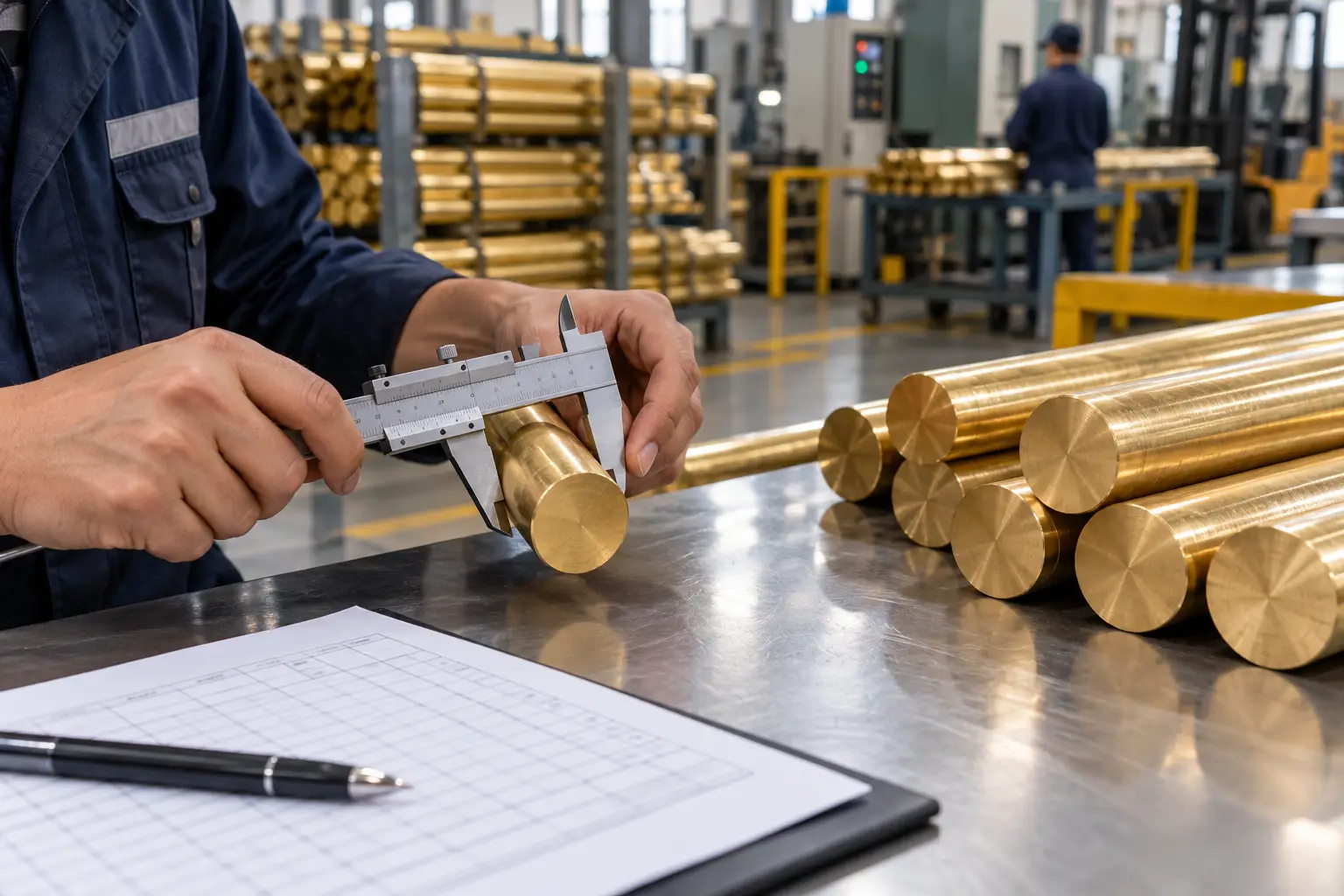
- Material records: ask for the mill certificate per lot, traceable to delivered parts.
- Drawing details: thread, knurl pattern, dimensions and tolerances per the drawing, with the target plastic.
- Samples: test them in your own molding, pressure and certification trials before mass production.
Brand owners selling into several markets often keep one drawing and release a separate part number per grade. Importers will find supplier routes on the importers and distributors page, and molders on the pipe manufacturers page. For valve certification in Europe, see what certifications PPR valves need for the EU market.
Sourcing brass inserts for your PPR fittings?
Send your drawing, target plastic and destination market. We will discuss the material grade and the documents your project needs, before quoting. Inserts are hot forged and CNC machined in our own plant in Yuhuan, Zhejiang, with five-stage quality control and knurling customized to your molding process.
Discuss your insert specificationFAQ
Is CW617N brass lead-free?
CW617N brass is not lead-free; its EN name CuZn40Pb2 shows a nominal lead content of about 2%. Lead is added for machinability and forgeability, so the grade is classed as a leaded brass.
Can CW617N be used in drinking water fittings?
CW617N can appear in drinking water fittings only where the finished product meets the destination market’s rules. In the US, the product must meet the 0.25% weighted-average lead definition across wetted surfaces. In the EU, materials must meet the Article 11 framework and any positive list that applies.
What is the lead content of CW617N brass?
The lead content of CW617N brass is about 2% by the nominal EN designation CuZn40Pb2. Datasheets from suppliers quote slightly different ranges, so confirm the exact limits in the EN product standard and the mill certificate of your lot.
Is CW602N lead-free if it resists dezincification?
CW602N is not lead-free, because dezincification resistance and lead content are separate properties. CuZn36Pb2As carries a nominal lead content of about 2%, like CW617N, so a market with a lead rule needs a different grade discussion.
How do I confirm that a brass insert meets a lead-free rule?
You confirm that a brass insert meets a lead-free rule by asking for the finished-product certificate that your destination market recognizes, plus the mill certificate for the delivered lot. Check that the certificate names the product, the scope and the date, instead of relying on a grade name.
Bottom line: CW617N is a leaded forging brass, so treat “lead-free” as a property of the certified finished product and not of the grade name. Write the grade, the destination market and the certificate you need on the RFQ, and settle them before tooling.