 跳至内容
跳至内容 
Everything a pipe/fitting molder or valve OEM needs to know before specifying a brass or stainless steel insert — what it is, how it’s made, which grade to choose, and how to keep it out of a warranty claim.
A brass or stainless steel insert is a metal component embedded into a plastic pipe fitting or valve body during injection molding, giving the plastic part a durable metal thread. Reliability depends on three things: the alloy grade matched to your water chemistry and market, the knurl and anti-rotation geometry that mechanically locks the insert into the plastic, and verified process control — pull-out force, torque, and dezincification testing — from your supplier.
- 01What Insert Molding Is (and Isn’t)
- 02Insert vs Cartridge: Two Different Components
- 03Brass or Stainless Steel: Choosing the Alloy
- 04Knurl and Anti-Rotation Engineering
- 05The Three Failure Modes to Design Against
- 06Standards and Certifications That Matter
- 07How to Spec an Insert Order
- 08Frequently Asked Questions
What Insert Molding Is (and Isn’t)
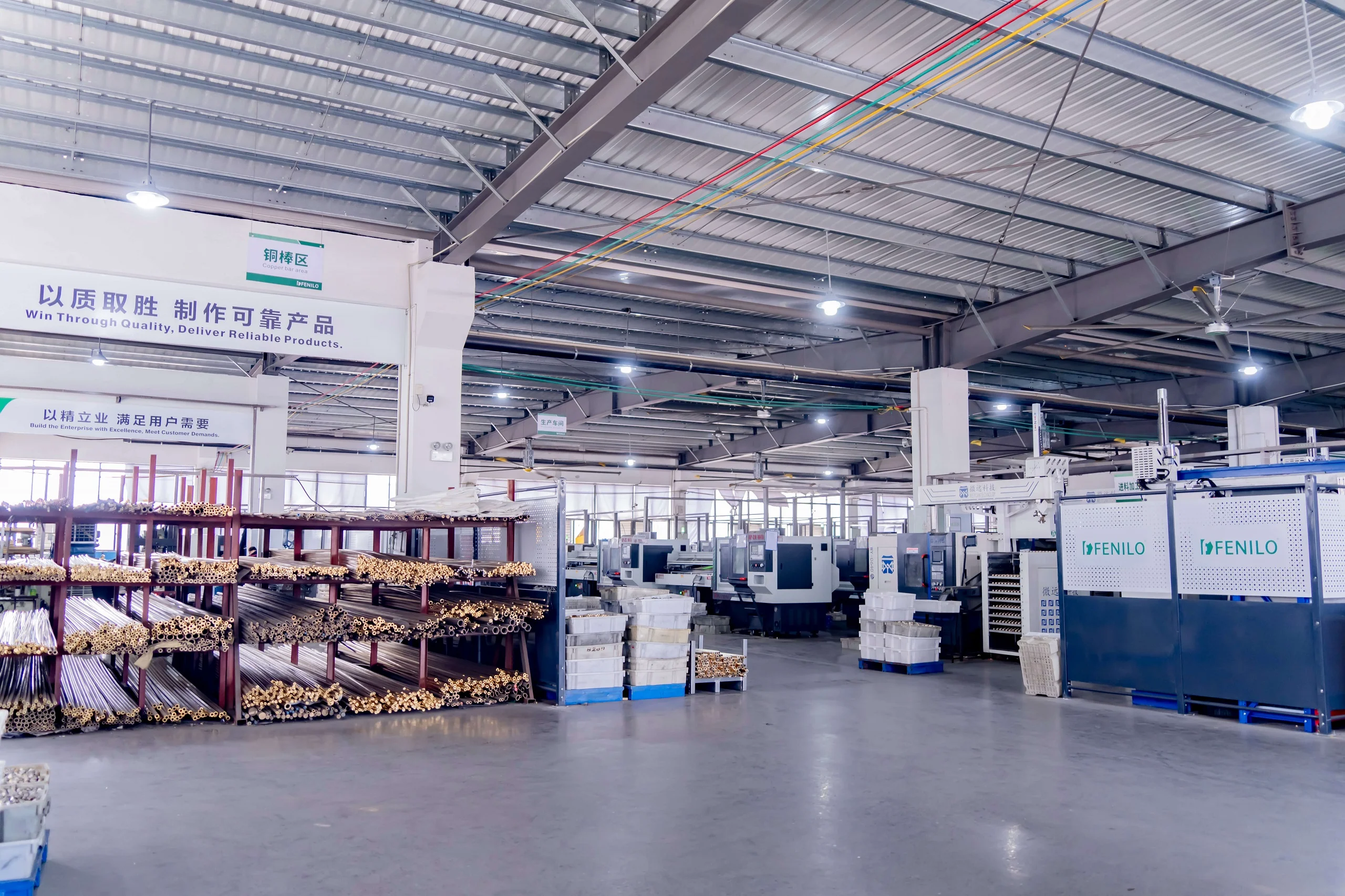
Insert molding is a manufacturing process where a pre-formed metal part — the insert — is placed into an injection mold cavity before the plastic shot is fired, so the molten plastic solidifies directly around it. The result is a single fitting with a permanent, non-removable metal thread. Because plastic and metal do not chemically bond to each other in this process, the entire strength of the joint depends on mechanical interlocking rather than adhesion — a distinction that matters every time a buyer assumes “molded in” means “glued in.”
This is different from over-molding a gasket, from threaded metal fittings that screw onto a plastic body after the fact, and from a cartridge assembly that simply drops into a finished valve. Insert molding happens in one shot, at the factory that owns the mold — which is exactly why insert design has to be right before tooling is cut, not adjusted afterward.
The economics reinforce this. A mold cavity built around a specific insert geometry — its outer diameter, knurl depth, flange profile, and placement tolerance — is expensive to modify once cut. Changing knurl pattern after tooling is finalized usually means a new insert-holding fixture inside the mold, not just a new insert supplier. This is why experienced buyers lock in insert specifications during the design-for-manufacturing phase, before quoting tooling, rather than treating the insert as a component to be finalized after the mold is already built.
Insert placement itself varies by production volume. Lower-volume runs typically place inserts by hand, which keeps tooling cost down but introduces operator-to-operator variation in seating depth and orientation. Higher-volume lines use robotic pick-and-place systems that hold placement tolerance consistently across a production run, at the cost of a more expensive mold and feeder setup. Neither approach is inherently better — the right choice depends on order volume, tolerance requirements, and whether the buyer needs statistical process control data for every batch.
Insert vs Cartridge: Two Different Components
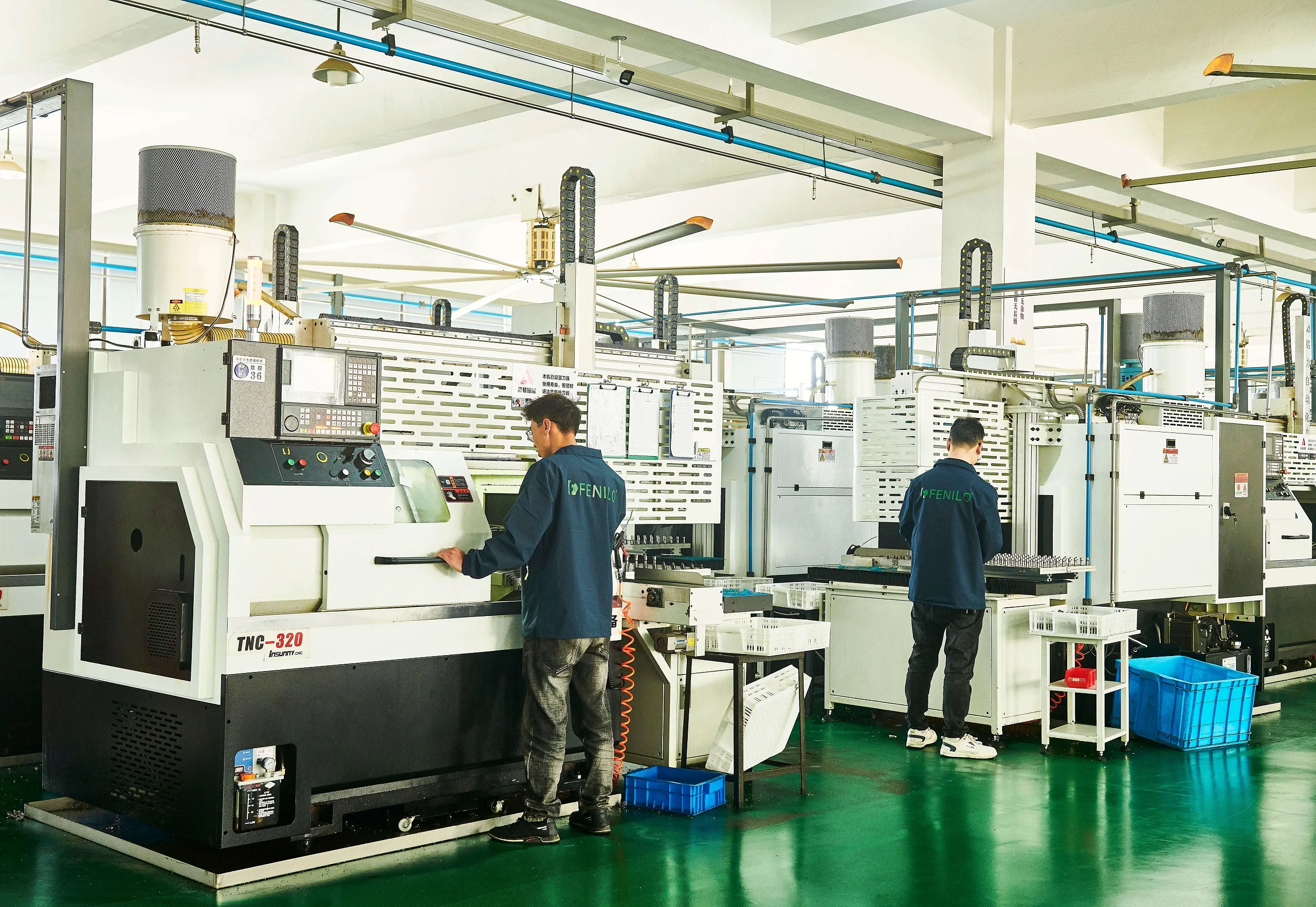
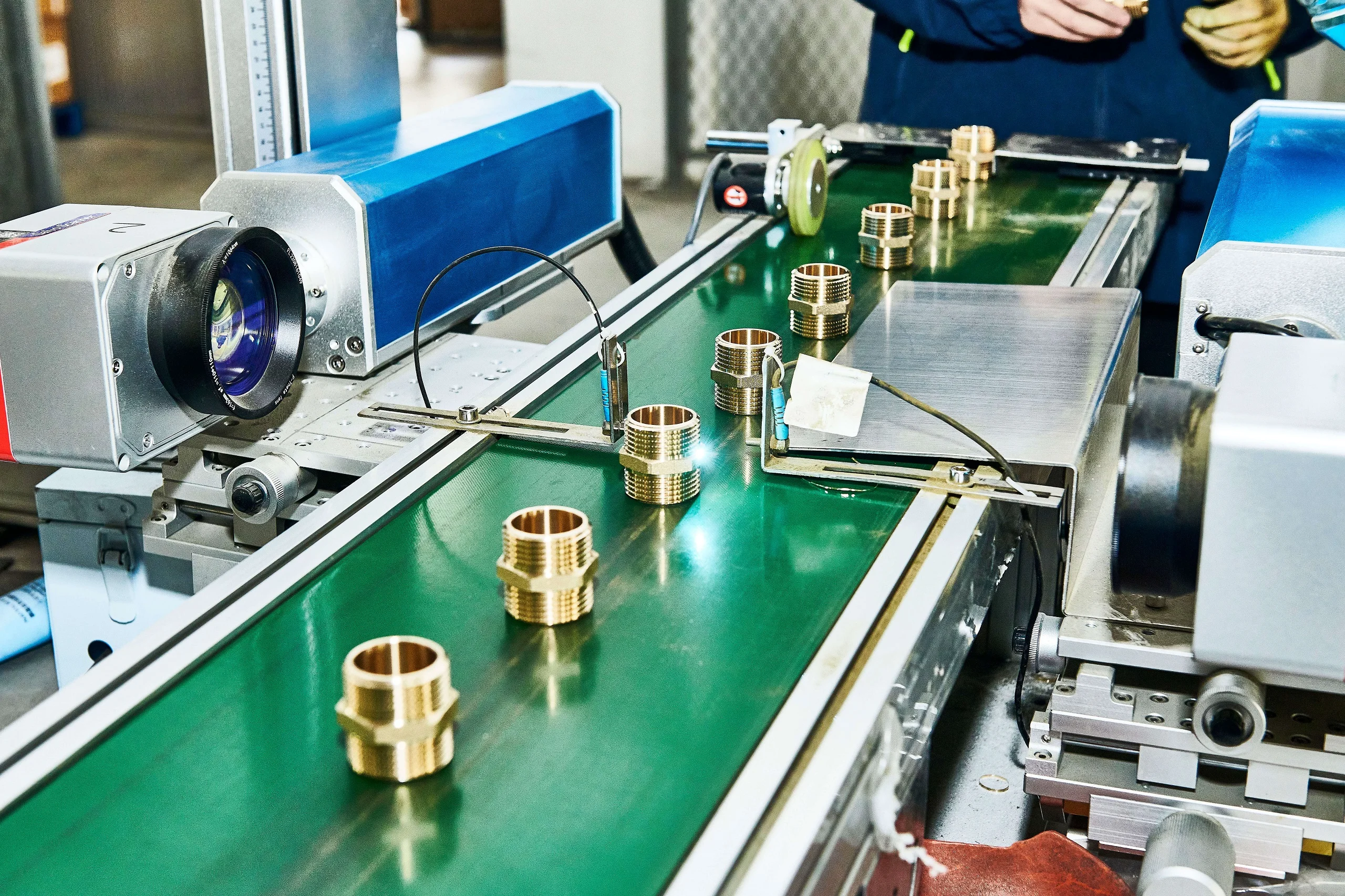
Buyers new to sourcing brass components often ask for “a brass insert” when they actually need a cartridge, or the reverse. An insert is fixed and has no moving parts — its only job is to carry a metal thread into a plastic body. A cartridge is a pre-assembled, moving mechanism — the ball, disc, or stem assembly that opens and closes a valve — built by CNC turning and assembly, not by molding. Many of Fenilo’s own finished PPR valves contain both: a molded insert at the pipe connection, and a separate cartridge as the flow-control core.
The practical consequence for sourcing is that these two components sit on different quotation paths inside most factories. Insert quotes are driven by knurl tooling, resin compatibility testing, and per-unit molding cycle time; cartridge quotes are driven by CNC machining time, seat material, and assembly labor. Asking a single supplier to quote “brass components” without specifying which one you need often produces a quote for the wrong part, or forces the supplier to guess — neither of which serves a buyer working against a launch timeline.
A useful test when evaluating a new supplier is to ask them to explain, unprompted, which of the two components your application needs and why. A supplier experienced in both insert molding and cartridge assembly will typically ask a clarifying question about your fitting or valve design before quoting; one that quotes immediately without asking is more likely treating the request as generic “brass parts” rather than engineering it to your specific requirement.
Brass or Stainless Steel: Choosing the Alloy
Brass (typically C36000 free-cutting brass) is the default insert material for standard PPR, PEX, and PVC water fittings — it machines fast, knurls cleanly, and its thermal expansion rate stays close enough to common plastics to hold the mechanical bond through years of thermal cycling. Stainless steel (grade 303 or 316) becomes the better choice under aggressive water chemistry, high chloride exposure, food or pharmaceutical contact requirements, or in export markets where lead content in brass is a regulatory concern, per the material science profile of stainless steel’s self-repairing chromium-oxide layer.
Cost is rarely the whole story, but it shapes most sourcing decisions in practice. Stainless steel inserts typically run 30-60% higher in raw material cost than an equivalent brass insert, and that gap widens further once tooling wear and slower cycle times are factored in — stainless is harder and less thermally conductive, so molders often need to extend cooling time per shot to avoid warping the surrounding plastic. For a buyer producing hundreds of thousands of fittings a year, that difference compounds quickly, which is why most manufacturers default to brass and reserve stainless for the specific applications where it earns its cost.
Lead content is the other recurring driver, separate from safety certification. Even “low-lead” brass alloys formulated to meet drinking-water component standards still contain measurably more residual lead than 300-series stainless steel. Some export markets and specific customer contracts restrict lead content below what brass can achieve regardless of certification status — in those cases, the decision isn’t really “brass vs stainless steel,” it’s “does this market’s lead policy rule brass out entirely.”
Passivation is worth a specific mention for stainless steel inserts. A freshly machined stainless part can have free iron particles embedded in its surface from tooling contact, which compromises the chromium-oxide layer that gives stainless its corrosion resistance in the first place. A passivation treatment after machining removes this contamination and lets the passive layer form properly — skipping it effectively negates much of the reason for choosing stainless steel over brass, so it’s worth confirming as a standard step in your supplier’s process rather than an optional add-on.
| Factor | Brass (C36000) | Stainless Steel (303/316) |
|---|---|---|
| Relative cost | Lower | 30-60% higher, grade-dependent |
| Corrosion resistance | Good in standard potable water; DZR grade needed for aggressive chemistry | Excellent, including chloride exposure |
| Machinability / knurl retention | Excellent | Moderate — needs tighter tooling control |
| Best-fit use case | Standard residential/commercial fittings | Marine, food/pharma, aggressive chemistry, lead-restricted export markets |
Knurl and Anti-Rotation Engineering
The knurl pattern cut into an insert’s outer surface is the mechanism that keeps it from spinning or pulling loose once molded in — there is no adhesive bond to fall back on. Diamond knurl patterns resist both rotation and axial pull-out; straight knurl resists rotation only. The most reliable inserts combine a knurl pattern with a second feature, such as an undercut shoulder, rather than relying on knurl geometry alone.
Knurl depth and pitch are engineering decisions, not defaults. Cut a knurl too shallow, and injection pressure alone can’t force the plastic to fully fill the grooves, leaving voids that become the starting point for a crack under load. Cut it too deep or too fine a pitch, and the plastic can shear along the groove peaks under stress rather than gripping them — deeper is not automatically stronger. The right depth and pitch depend on the specific resin’s flow characteristics and shrinkage rate, which is why a knurl pattern validated for PPR does not automatically transfer to a PEX or PVC application without re-testing.
Circumferential grooves and flat-milled sections serve a different purpose than knurling. A circumferential groove resists axial pull-out specifically, independent of the knurl pattern’s rotational grip; a flat or hex section resists torque during installation, when a wrench is applied to the fitting and the insert needs to stay put rather than spin inside the plastic. Combining knurl, groove, and an undercut shoulder gives three independent failure-resistance mechanisms instead of one — costing modestly more in tooling complexity but leaving far more margin against process variation on the molding line.
The Three Failure Modes to Design Against
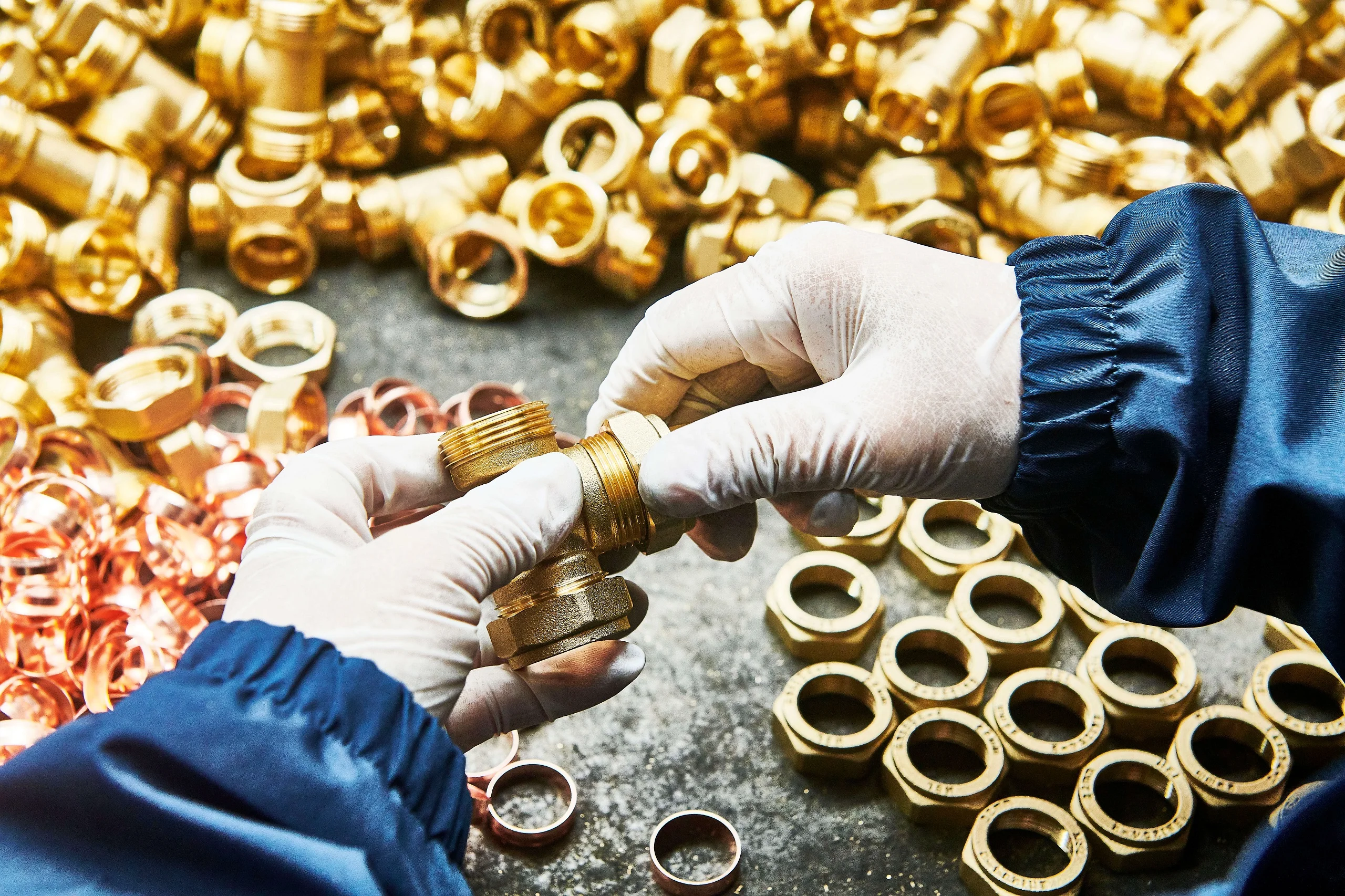
Nearly every field return on an insert-molded fitting traces back to one of three failure modes, each with a distinct cause: pull-out (a knurl or molding-process issue), interface leakage (differential thermal expansion opening a microscopic gap over time), and corrosion — specifically dezincification, where zinc leaches out of a brass alloy under aggressive water chemistry, tested against ISO 6509. Corrosion is the hardest to catch at incoming inspection because a dezincification-prone insert performs identically to a resistant one on day one.
What separates these three modes in practice is timing. Pull-out and interface leakage usually surface during pressure or thermal-cycling testing before a product ever ships, because both are triggered by mechanical stress that a proper test protocol will reproduce. Corrosion is different — dezincification can take months or years to progress far enough to cause a visible leak, depending on water chemistry, meaning a batch of inserts can pass every pre-shipment test and still fail in the field once the alloy has spent enough time in aggressive water. This is exactly why alloy certification against a recognized test standard matters more for corrosion than testing alone ever could.
Treating all three as “the insert failed” leads to the wrong fix. A pull-out problem needs a knurl or process change; a corrosion problem needs a different alloy or DZR certification — swapping one for the other won’t solve a failure mode it wasn’t designed to address.
Standards and Certifications That Matter
- ISO 6509 — dezincification resistance test for brass alloys exposed to water; ask for a certificate against your target water chemistry, not just a general pass.
- NSF/ANSI 61 — drinking water system component standard, referenced by NSF International, relevant for any insert or cartridge that will contact potable water.
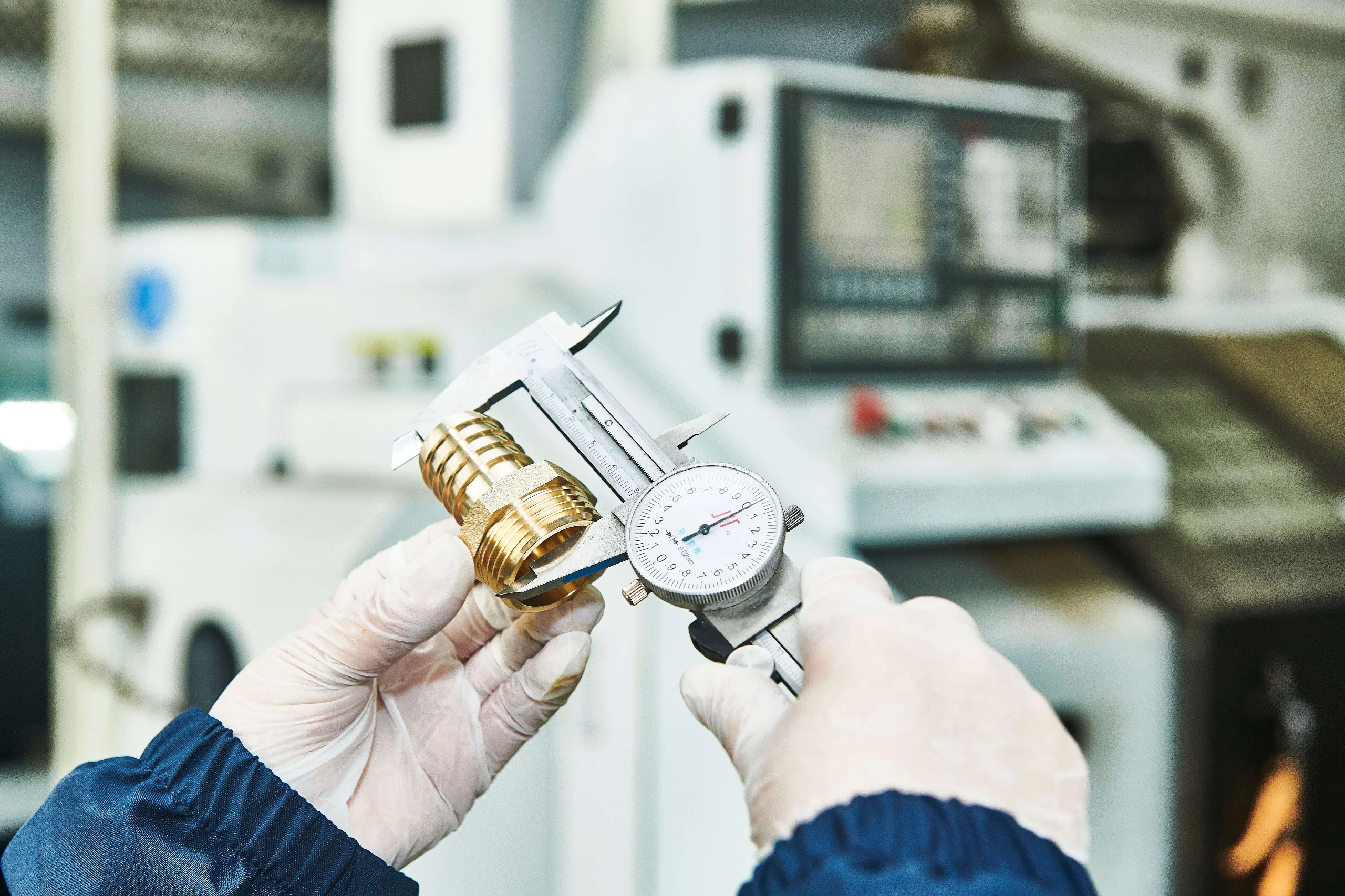
- ISO 286 — general tolerance and fit standard for turned metal parts, useful as a shared dimensional reference when a batch is rejected on fit rather than a subjective call.
- ASTM material specifications — ASTM International alloy standards for brass and stainless steel grades, worth citing explicitly in your purchase order rather than trusting a generic “brass” or “stainless steel” description.
None of these standards are self-enforcing — they only protect a buyer if the purchase order names them explicitly and the supplier provides test certificates tied to the actual production lot, not a generic material datasheet. A certificate that doesn’t reference the specific standard, test method, and lot number is effectively unverifiable, and should be treated the same as no certificate at all when evaluating a new supplier.
How to Spec an Insert Order
A complete insert specification should cover, at minimum: the alloy grade (with the standard it’s tested against), the knurl pattern and any secondary anti-rotation feature, the thread standard (BSP or NPT) and dimensions, the target pull-out force and torque rating for your pressure class, and the resin the insert will be molded into. Suppliers who can return pull-out and dezincification test data with a quotation, rather than only when pressed, are generally running tighter process control.
| Spec Item | Why It Matters |
|---|---|
| Alloy grade + test standard | Determines corrosion resistance and lead compliance for your target market |
| Knurl pattern + secondary feature | Determines pull-out and anti-rotation resistance |
| Thread standard (BSP / NPT) + dimensions | Ensures compatibility with your fitting design and regional plumbing conventions |
| Target resin | Knurl and molding parameters differ by plastic shrinkage rate |
| Pull-out force + torque target | Gives both sides a measurable pass/fail threshold instead of a subjective judgment |
Buyers new to this category often treat the insert as a minor line item on a larger fitting or valve order — a mistake that shows up later as a field failure traced back to a spec that was never actually written down. Committing these five items to paper before requesting quotes tends to filter out suppliers who can’t answer with specifics, which is itself useful information.
Lead time and minimum order quantity (MOQ) deserve the same upfront clarity as the technical spec. Insert tooling — the knurl-cutting and fixture setup specific to your geometry — is typically a one-time cost amortized across the first production run, which means a first order often carries a longer lead time and higher effective per-unit cost than repeat orders on the same tooling. Buyers evaluating multiple quotes should compare tooling-inclusive first-order pricing separately from steady-state repeat pricing, since a supplier quoting only the lower repeat-order number can make an unrealistic first-order timeline look competitive on paper.
- Molding your own PPR/PEX/PVC fittings? Specify inserts — knurl pattern, thread standard, and insert-molding tolerance.
- Assembling or private-labeling valves? Specify cartridges alongside your inserts — pressure rating, seat material, and cycle-life testing.
- Buying a finished valve, not building one? Confirm the cartridge and connection inserts are sourced from the same factory — mismatched tolerances between the two are a common field-leak cause.
Frequently Asked Questions
What’s the difference between an insert and a cartridge?
An insert is fixed and molded into plastic with no moving parts; a cartridge is a pre-assembled mechanism with a moving ball, disc, or stem that controls flow inside a valve.
How do I know if I need brass or stainless steel?
Default to brass unless your water chemistry is aggressive, your market restricts lead content, or the application involves food, pharmaceutical, or marine exposure — in which case stainless steel (grade 303 or 316) is the safer specification.
Can a supplier prove an insert won’t fail in the field?
No supplier can guarantee zero failures, but a supplier who shares pull-out force, torque, and ISO 6509 dezincification test data as standard practice is giving you the evidence needed to judge reliability before committing to a production run.
Does insert molding work with any plastic resin?
It’s most reliable with thermoplastics that have moderate shrinkage rates, such as PP-R and PEX-compatible compounds; resins with very high shrinkage can generate enough stress around a rigid insert to crack the surrounding plastic.
Can an existing insert design be reused across different plastic resins?
Not automatically — a knurl and tolerance combination validated for one resin’s shrinkage behavior may under- or over-grip a different resin, so switching plastics typically warrants re-validating the insert design rather than assuming it transfers.
What’s the biggest mistake first-time buyers make when sourcing inserts?
Treating the insert as an afterthought to the fitting or valve design instead of specifying alloy, knurl geometry, and test requirements up front — most field failures trace back to a spec that was never written down, not to a supplier cutting corners.
Fenilo manufactures knurled brass and stainless steel inserts for OEM insert-molding programs, and precision brass cartridges for valve assembly — with pull-out, torque, and ISO 6509 test data available on every quotation. Send us your fitting drawing, resin, and target market to get started.
Sources — Wikipedia: Insert Moulding · Wikipedia: Stainless Steel · ISO: ISO 6509 Dezincification Resistance Test Method · NSF International: What Is NSF/ANSI 61 · ASTM International